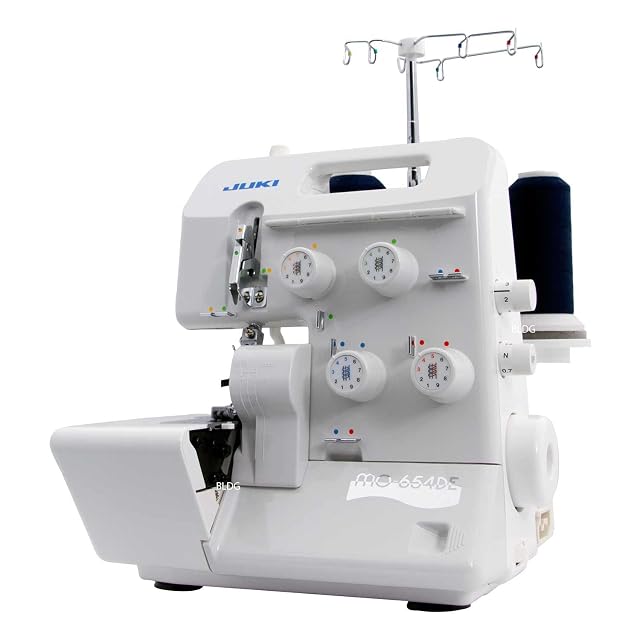
Clean after every session, not every project: an overlocker cuts fabric continuously and the offcuts pack around the loopers. Empty the waste tray. Brush the blade area and the looper area thoroughly. Check the blade by looking at the cut edge on a scrap — a clean cut means the blade is fine, a chewed one means the lower blade is due. Re-thread in the order the manual gives, loopers before needles, and never pull thread backwards through the tension discs.
Questions people actually ask
How do I know the blade needs replacing?
The machine chews rather than cuts, leaving a ragged edge with threads hanging. Replace the lower blade first — it does most of the work and is usually the cheaper of the two. People habitually replace the upper one because it is the visible one.
Why does my overlocker produce so much lint?
Because it trims the fabric as it sews, so it is generating offcuts continuously. Clean it every session — the lint packs around the loopers and changes how the stitch forms.
Last reviewed 2026-08-11