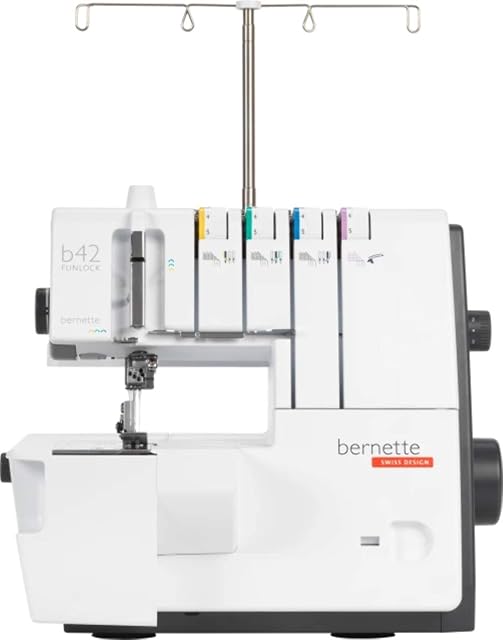
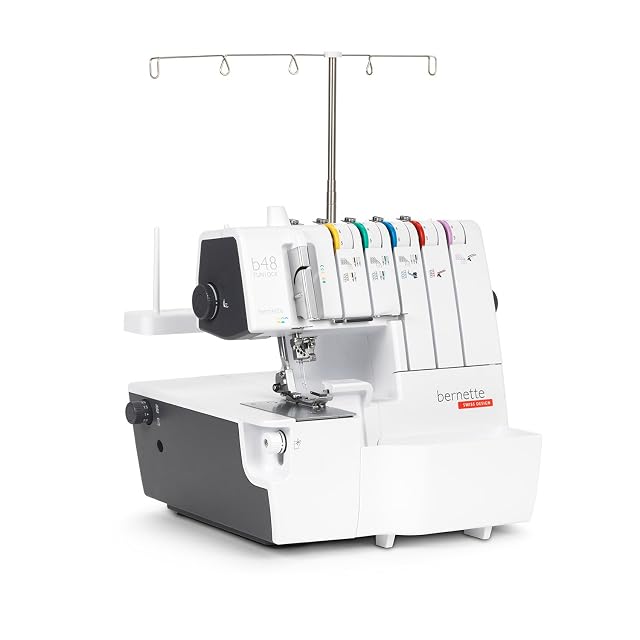
A cover and chain stitch machine with three needles, colour-coded threading guides and a stated 1,350 stitches per minute. Present on five of the six markets we checked — not Spain.
The bottom line Colour-coded threading and a chain stitch, with an import caveat worth reading before you order.
Hands-on testing pending. Everything below is either a manufacturer
specification, cited as such, or something we verified ourselves.
What we verified. The reference B06XHYQ4RS designates this machine on
amazon.de, .fr, .it, .co.uk and .com, confirmed on EAN. It is absent from
amazon.es, so a Spanish reader is sent to a local search.
One oddity: the US listing carries the title “Juki MCS-1600”. We have kept the
reference because the identifier matched, but flag it — Juki’s 1500 and 1600
are adjacent models and we would want a second source before telling a US reader
they are buying the same machine. If you are in the United States, check the
listing before ordering.
What the manufacturer states. Three needles, a 3-thread coverstitch and a
4-thread chain stitch, up to 1,350 stitches per minute, and colour-coded
threading guides for the machine and its loopers. Listed weight 9.0 kg.
Why colour-coded threading is the whole argument. Every review of this class
of machine eventually reduces to the same question: will you thread it, or will
it live in its box? Colour-coded guides are the difference, and they are worth
more than any speed figure on the page.
Where we would look before buying. How the differential behaves on fine
jersey, and whether the free arm — if fitted — clears a narrow sleeve. Cuff hems
are the job people buy a coverstitch machine for and the one these machines
most often struggle with.
What we like, and what we don't
Strengths
Colour-coded threading guides — the single feature that decides whether this class of machine gets used
Chain stitch as well as coverstitch, which few domestic machines offer
Compromises
Not listed on amazon.es
Amazon's own listing warns it may be an international import with different documentation language
Chain stitch is a specialist operation most home sewers will never need
Specifications
Type
Cover and chain stitch
Needles
3
Stitches
3-thread coverstitch, 4-thread chain stitch
Maximum speed
1,350 stitches/min (manufacturer)
Threading
Colour-coded guides
Weight
9.0 kg
Questions people actually ask
What is a chain stitch for?
It is the stitch you find on the side seam of workwear and on the hem of jeans: it stretches, it is strong, and it unravels completely if you pull the right end. Most home sewing does not need it. If you make denim or workwear, it is the reason to choose this machine over a coverstitch-only one.
Why does the listing mention international products?
Amazon flags it as potentially sold from abroad, which can mean a manual in another language and a different warranty route. We have left the note in rather than editing it out, because it is a real consideration on a machine of this price.
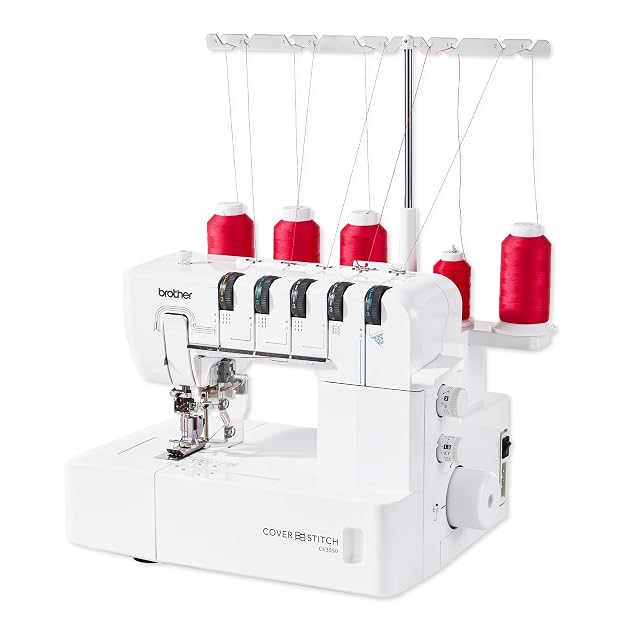
A dedicated coverstitch machine — not a combination unit — with a separate needle threader and a looper threading mechanism. One reference on all six markets we checked.
Best for: Anyone who already owns an overlocker and wants proper twin-needle hems on knits
Overlock + coverstitch + chainstitch · UK and US only
A combined overlock and coverstitch machine, proven on the UK and US stores only. On the German store the same search returns a set of presser feet, which is the more useful warning.
Best for: A UK or US buyer who wants both operations without two machines on the table
A well-documented coverstitch machine running two to five threads, with a 155 mm throat and differential feed. Five European markets; on amazon.com the search returns an accessory, not the machine.
Best for: Hemming knits properly, and anyone who has outgrown a twin needle on a normal machine