The bottom line The widest availability in this batch, with a specification that is actually stated.
Hands-on testing pending. Everything below is either a manufacturer
specification, cited as such, or something we verified ourselves.
What we verified. The reference B071QWRZWR designates this machine on all
six Amazon stores we checked — Germany, France, Italy, Spain, the United Kingdom
and the United States — confirmed on the barcode rather than the title. Two
models in this batch managed six markets. This is the more capable of them.
What bernette states. Computerised operation, fifty stitches and an LCD
display, with sewing and quilting both named. That specification appears in full
only on the American listing; the German and Italian pages are titled “Bernina
Bernette B37” and stop there, and the French and Spanish pages give the model
name alone. The barcode is identical across all six, so it is one machine
described at six different levels of detail.
The trade you are making. A computerised machine gives you repeatable
settings and an automatic buttonhole. It also puts a control board between you
and the mechanism, and when that board fails the machine goes to a dealer rather
than to the repair shop on the high street. bernette’s dealer network exists
across Europe, which is part of what the badge is for.
What we like, and what we don't
Strengths
One reference on every market we checked, Europe and the United States
Stitch count and display type are actually published
Compromises
Only the American listing states the specification in full
Computerised machines need a dealer, not a general repairer, when the board fails
Specifications
Type
Computerised (manufacturer)
Stitches
50 (manufacturer)
Display
LCD (manufacturer)
Range
bernette, the Bernina group's second line
Amazon reference
B071QWRZWR (all six markets)
Questions people actually ask
What does computerised actually change?
Stitch selection and stitch geometry move from a cam and a dial to a motor under software control. In practice you get more stitches, repeatable settings, and usually an automatic buttonhole sized to the button. What you give up is repairability: a mechanical machine can be fixed by anyone, a control board cannot.
Fifty stitches — is that a real advantage over thirteen?
For decorative work, yes. For construction, no. The stitches that build a garment number about five, and every machine has them. What a wider selection buys is stretch stitches, blind hems in more than one form, and decorative rows. Useful, but it is not the reason to choose one machine over another.
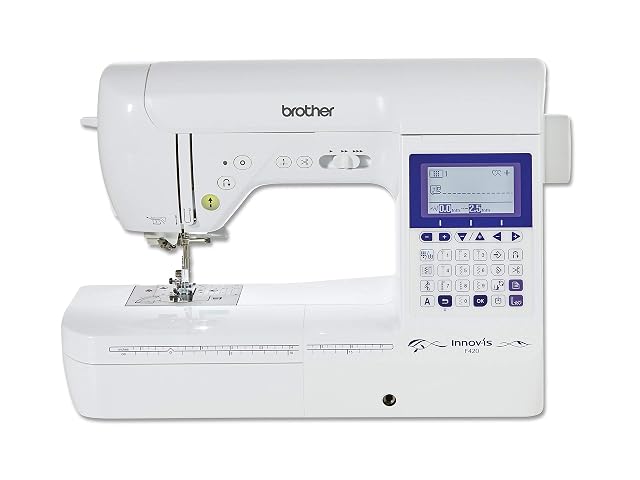
Brother's upper-mid computerised machine: 140 stitches, ten buttonhole styles, an automatic thread cutter and a 3.5-inch screen. One reference across the whole of Europe, absent from the US.
Best for: Garment sewing where buttonholes and finish matter more than raw power
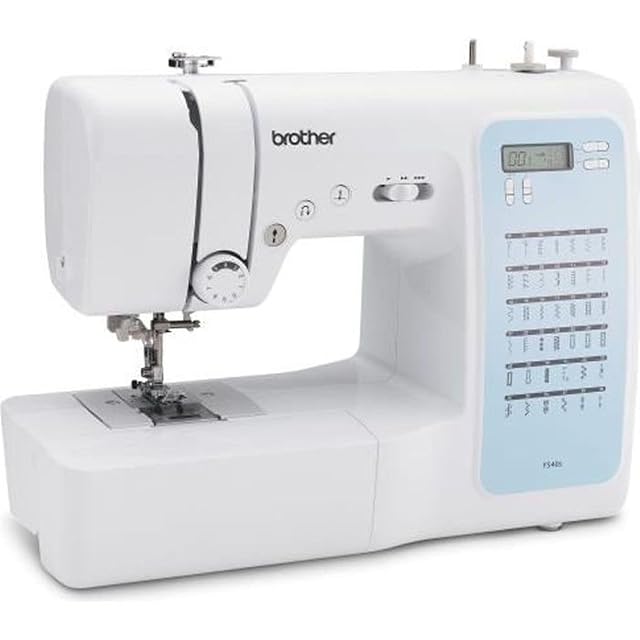
Brother's light computerised machine: 40 stitches, an LCD, a needle threader and a free arm, at just under three kilos. One reference on all six Amazon stores we checked.
Best for: Light dressmaking, alterations and a first machine that has to live in a cupboard